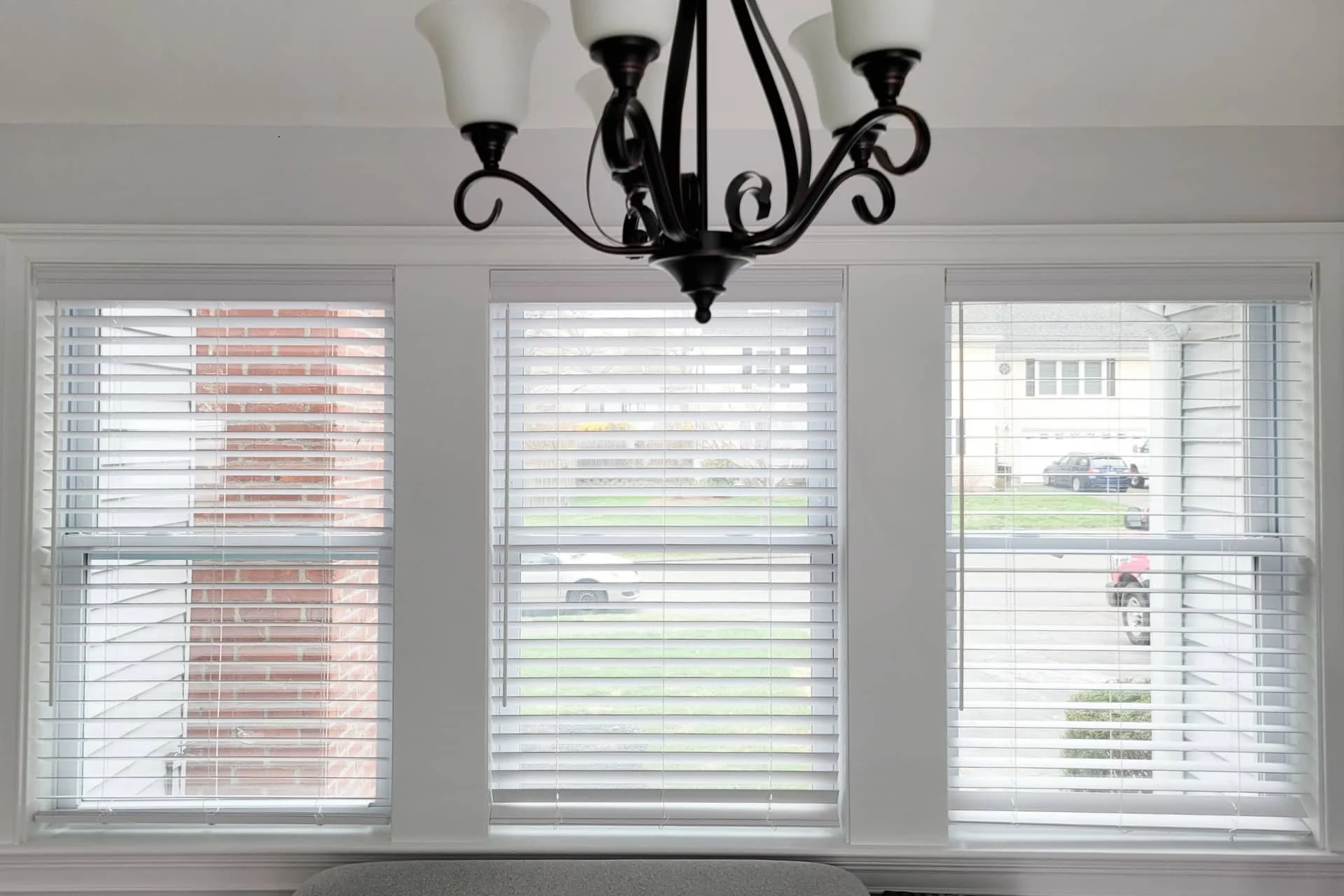
Wood blinds have a warmth and richness that's hard to match with any other material, which is exactly why so many homeowners want them, right up until they hear the word "humidity." Between the two, faux wood is the clear winner for coastal North Carolina homes, since it's built from PVC and composite materials that simply don't absorb moisture the way natural wood does. Real wood can still work in the right room, but it comes with a maintenance conversation that faux wood never asks for.
Why Is Humidity Such a Problem for Wood in the First Place?
Wood is what's known as hygroscopic, meaning it naturally absorbs and releases moisture depending on the humidity around it. According to the USDA Forest Service's Forest Products Laboratory, wood's equilibrium moisture content roughly doubles as relative humidity climbs from 50% to 90%, moving from around 9% moisture content up to over 20%. That's not a small shift, and it's exactly what drives the swelling, warping, and splitting that real wood blinds are prone to once they're hung in a humid room.
How Do Real Wood Blinds Hold Up in Coastal Homes?
Real wood blinds bring genuine grain texture and a depth of color that faux wood can't fully replicate, and for a dry, climate-controlled room, they perform beautifully for years. The trouble starts in spaces with regular humidity swings: bathrooms, kitchens, sunrooms, or any room near a frequently opened door to the outside. As the slats absorb moisture, they can swell slightly, which shows up as sticking, warping, or a slat that no longer sits flush with the ones around it.
Finishes can also crack or peel over time as the wood beneath expands and contracts, and once that protective coating starts to fail, the exposed wood absorbs moisture even faster than before. It becomes a cycle that speeds up the more humid the room stays, which is why a real wood blind in a bathroom tends to look tired years before the same blind in a dry hallway.
How Does Faux Wood Perform Differently?
Faux wood blinds are made from PVC or a wood-composite blend, materials that don't absorb water the way cellular wood fibers do. That means no swelling, no warping, and no slow degradation of the finish from repeated humidity cycles. Faux wood also tends to be more resistant to cracking and yellowing from UV exposure, which matters in a coastal home where sunlight through the glass is intense for much of the year.
The tradeoff is a slightly less refined texture than real wood up close, though modern faux wood finishes have closed that gap considerably. Cleaning is simpler too, since a damp cloth wipes faux wood down without the risk of introducing more moisture into wood that's already trying to shed it.
Coastal North Carolina's Humidity Is More Than a Minor Concern
Humidity isn't a hypothetical problem here. According to the National Weather Service, Wilmington's morning relative humidity regularly climbs above 85% during the warmer months, and the area's daily average humidity runs around 74% year-round. Combine that baseline humidity with salt air and the occasional wide-open sliding door, and wood blinds in a coastal home are working against tougher conditions than the same blinds would face inland.
Where Does Real Wood Still Make Sense?
Real wood isn't off the table entirely. In rooms with reliable climate control and limited humidity swings, like a formal living room, home office, or bedroom set back from exterior doors, real wood blinds can perform well for years without issue. The key factors are consistent indoor humidity and minimal direct exposure to moisture-heavy spaces. For those rooms, the natural material and finish options real wood offers are worth considering if the look matters more than eliminating every bit of maintenance risk.
Making the Right Call Room by Room
The smartest approach for most coastal homes is mixing materials based on the room rather than picking one option for the whole house. Faux wood in bathrooms, kitchens, and any room near sliding or French doors protects against the humidity swings that cause real wood the most trouble. Real wood can still shine in drier, more climate-stable spaces where its texture and warmth are worth showing off. That room-by-room approach gets you the best of both without gambling on wood in a spot where humidity is working against it daily.
Find the Right Fit for Your Home With Surf City Blinds
At Surf City Blinds, we walk every room with you during your free in-home consultation and point out exactly where faux wood makes more sense than real wood, and where real wood will still hold up well over time. We help homeowners across Wilmington, Jacksonville, Hampstead, Surf City, and Topsail Beach choose materials built for our coastal humidity, room by room. Reach out today to schedule your free consultation.
Frequently Asked Questions
-
Sealants and finishes can slow moisture absorption somewhat, but they don't eliminate it. In consistently humid rooms, even well-finished real wood will eventually show some swelling or warping over time.
-
Modern faux wood finishes have closed much of that gap, with realistic wood grain texturing and matte finishes. Most people can't tell the difference from a few feet away.
-
Faux wood is generally heavier than real wood, which can matter on very wide or tall windows. A professional measurement ensures the hardware is rated to support the extra weight.
-
Bathrooms, kitchens, sunrooms, and any room with sliding or French doors that see regular humidity swings are the best candidates for faux wood over real wood.
-
Pricing varies by brand and finish, but faux wood and real wood are often comparably priced. Faux wood's lower long-term maintenance can make it the better value in humid rooms.