Furnishing a rental property is its own category of decision-making, and windows are one of the places owners tend to underestimate. A treatment that looks great in a full-time home doesn't always hold up to guest turnover, unfamiliar hands, and a climate that's harder on materials than most people expect. The short answer: prioritize child-safe designs, choose durable low-maintenance materials like faux wood or tightly woven cellular shades over anything delicate, and reserve view-friendly styles like top-down bottom-up shades for the rooms where guests are paying for the scenery. We work with a lot of Surf City and Topsail Beach rental owners who learn this the expensive way, replacing treatments within a year or two of a poor initial choice.
What Makes a Rental Property Different From a Full-Time Home?
Guests use a space differently than an owner does. Shades get left up in direct sun for a full week of vacation, and there's no one around daily to notice small issues before they become bigger ones. A hinge that starts sticking or a slat that's bent gets used anyway rather than reported, since guests are on vacation, not managing the property, and most won't think to mention it before checkout.
Turnover itself adds wear that a full-time home never sees. A treatment in an owner-occupied house might get opened and closed by the same one or two people, the same way, for years. In a rental, that same window treatment can see dozens of different households a year, each with their own kids, their own habits, and zero familiarity with how the thing is supposed to work. Cleaning crews add another layer of handling between each stay, often on a tight schedule that doesn't leave room for gentle treatment. Durability and simplicity end up mattering more here than they might in a home where the owner is present to manage and maintain things themselves, and choosing with that reality in mind upfront is usually cheaper than learning it after a season of guests.
Why Does Cordless Matter So Much in a Guest-Occupied Space?
This is one of the clearest calls in rental design. According to the U.S. Consumer Product Safety Commission, nearly half of incidents involving children entangled in window covering cords between 2009 and 2021 resulted in death. That risk is one that owners have far less control over in a rental than in their own home, since they can't personally supervise every family that stays there. Cordless shades remove that risk entirely and are worth prioritizing regardless of the age range a property typically hosts.
Which Materials Hold Up Best to Salt Air and Humidity?
Faux wood outperforms natural wood by a wide margin in a coastal rental, resisting the warping and cracking that humidity and salt exposure cause over time. Natural wood tends to absorb moisture from the air even indoors, which over a season or two of coastal humidity can lead to slats that swell, stick, or warp out of shape, an issue faux wood simply doesn't have since they don't absorb moisture the same way.
Cellular shades in tightly woven, moisture-resistant fabrics also do well in a coastal rental, though anything delicate or easily stained is worth avoiding given how much more wear a rental sees compared to a private residence. Light-colored or textured cellular fabrics in particular show stains and sun damage faster in a rental setting, so darker, tighter weaves tend to age better and hide the inevitable wear between cleanings. Their honeycomb structure adds a layer of insulation too, which helps keep energy costs down in a property that may sit empty or run on a management company's thermostat schedule for stretches of the year. This is one area where spending a bit more upfront on the right material saves considerably on replacement costs down the road.
Is Motorization Worth It for a Property You're Not Living In?
For a lot of rental owners, yes, particularly for hard-to-reach windows or properties managed remotely through a cleaning or management service. Motorized shades that can be scheduled to open and close automatically help control interior fading and heat buildup even when no one's staying at the property, which is a real advantage for a home that sits empty part of the year.
Privacy Without Losing the View Renters Are Paying For
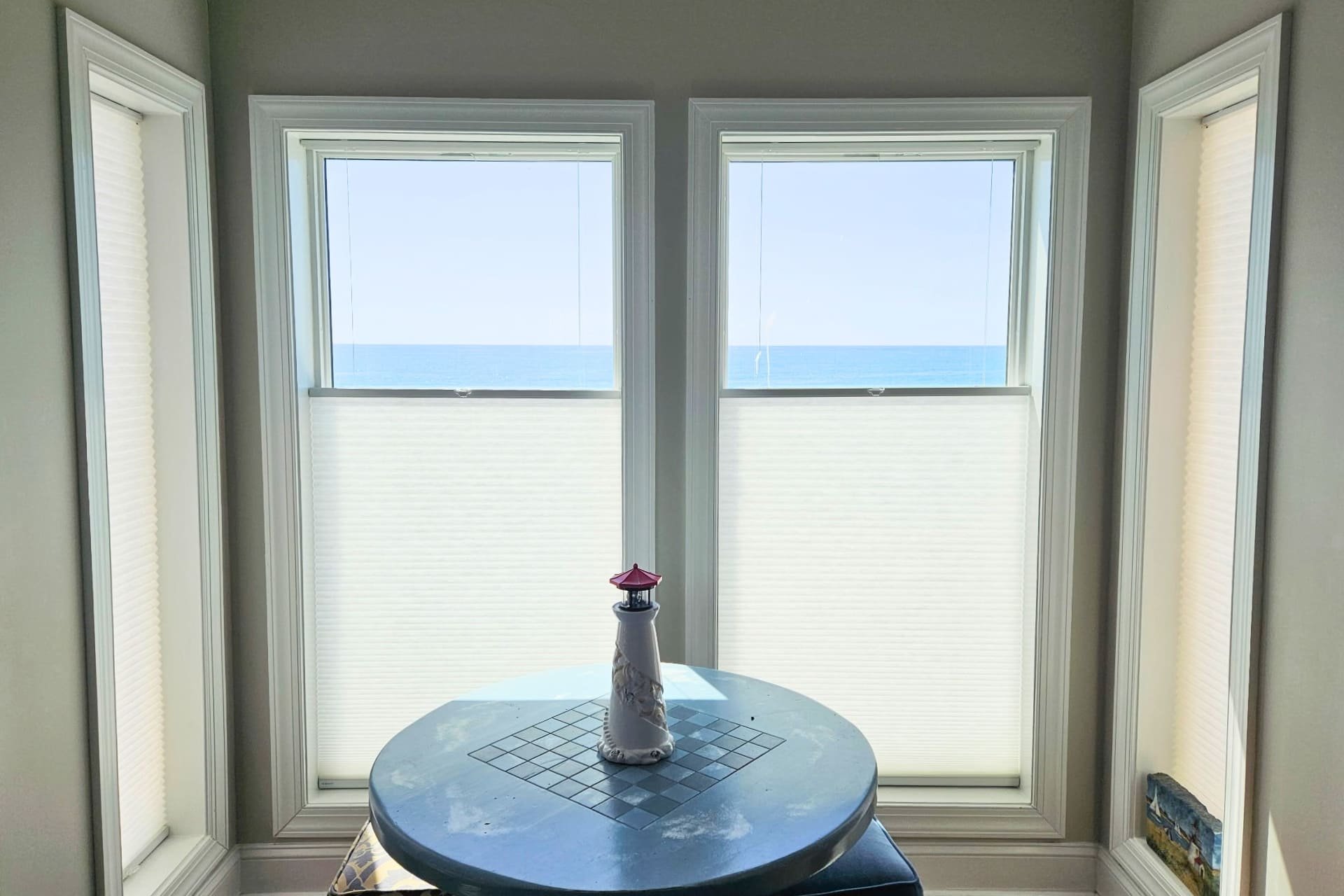
Guests are paying for the view as much as anything else, so treatments that block out the view entirely in main living areas can undercut what made the property appealing in the first place. Top-down bottom-up shades solve this well, letting light and view stay open at the top while covering the lower portion for privacy.
Bedrooms are the one place where heavier light-filtering shades are usually worth prioritizing over view, since guests on vacation tend to want the option to sleep in. A mix of both approaches across the property, view-preserving in common areas and stronger light control in bedrooms, tends to satisfy the widest range of guest preferences.
Why This Investment Pays Off Over Time
Vacation and second-home ownership is a meaningful and growing part of the housing market here, not a niche concern. According to the National Association of Realtors, vacation homes have accounted for roughly 5 to 8 percent of all home sales in recent years, and that population of owners increasingly relies on rental income to help offset the cost of ownership. Getting window treatments right the first time protects that investment, since a property that photographs well and holds up to guest turnover rents better and needs replacing less often.
Ready to Set Up Your Rental the Right Way?
At Surf City Blinds, we help rental owners across Surf City, Topsail Beach, and Hampstead choose window treatments built to survive guest turnover and coastal conditions without sacrificing the look that makes a listing stand out. If you're furnishing or refreshing a rental property, request your free in-home consultation, and we'll help you get it right the first time.
Frequently Asked Questions
-
They generally do, mostly because rentals see more wear from guest turnover and less day-to-day supervision than an owner-occupied home. Prioritizing durable, low-maintenance materials tends to matter more in a rental than style alone.
-
It varies by material and use, but rental treatments generally need replacing more often than a full-time home's, often every few years rather than closer to a decade. Choosing durable materials like faux wood and cellular shades upfront stretches that timeline out considerably.
-
For remotely managed properties or homes with hard-to-reach windows, motorization often pays for itself in convenience and consistency, especially when treatments can be scheduled to open and close automatically between guest stays.
-
Faux wood tends to outperform natural materials in humid, salty coastal conditions, resisting warping and cracking far better over time.
-
Not necessarily. Bedrooms usually benefit from heavier light-filtering fabrics, but living areas and spaces with a strong view often do better with top-down bottom-up shades that preserve the view while still offering privacy when needed.