What's the Best Way to Add Privacy to a Bathroom Without Sacrificing Natural Light?
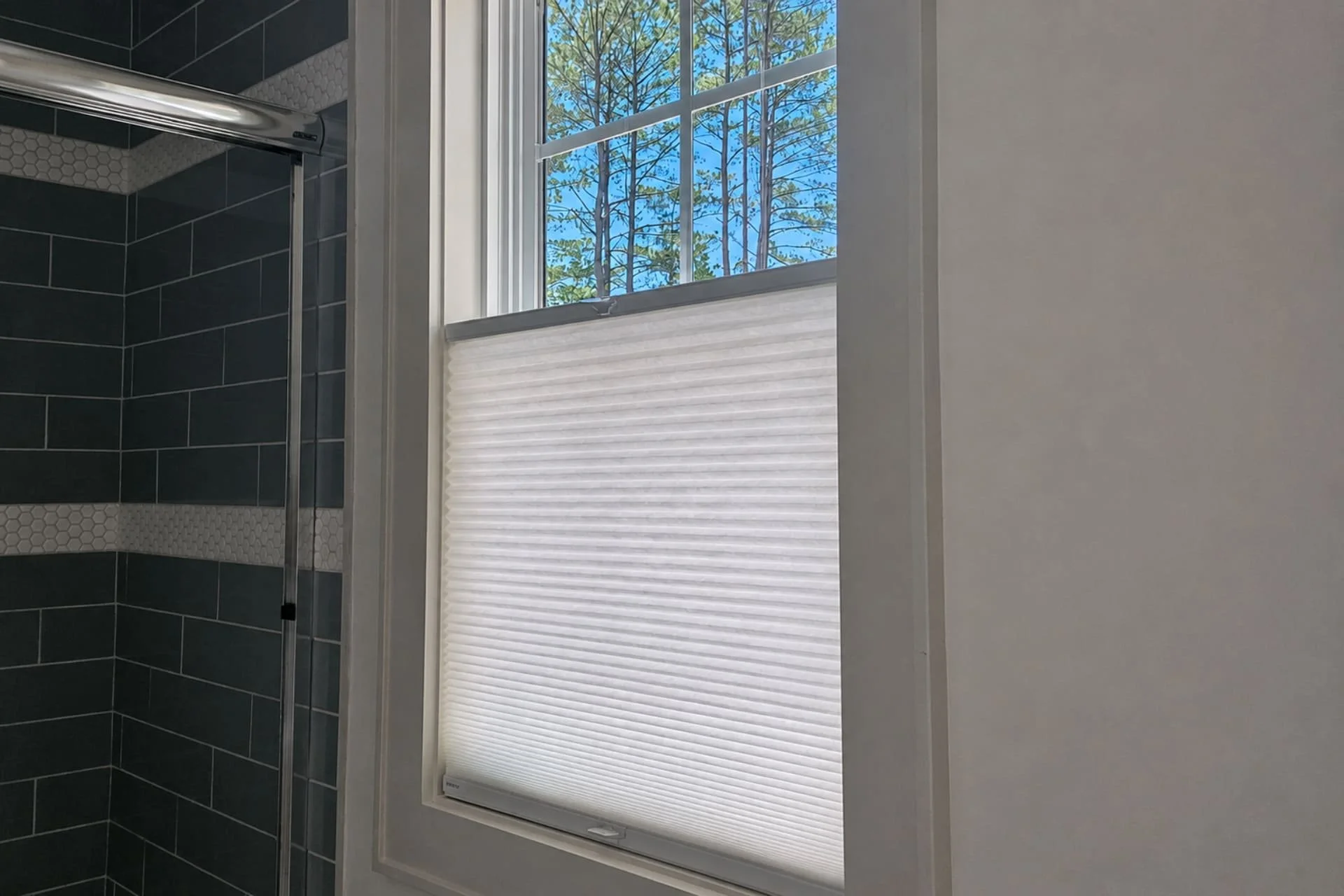
If your bathroom window makes you choose between privacy and daylight, the fix usually isn't a heavy curtain; it's a window treatment that only covers the lower half of the glass. Options like a top-down bottom-up shade, a light-filtering cellular shade, or adjustable shutters block the eye-level view while leaving the top of the window open to let light in. It's a small distinction, but it solves a problem a lot of homeowners have learned to just live with: that specific kind of dread that comes with a bathroom window you can't quite trust. Maybe it faces the street, or a neighbor's driveway, or that shared walkway everyone in the neighborhood uses to get to their mailbox. So the blinds stay shut, all day, every day, and the bathroom turns into this dim little box you only really see clearly with the overhead light blasting at noon.
We get this question constantly from homeowners around Surf City and Hampstead, especially anyone with a bathroom window facing the street, a neighbor's yard, or a shared walkway. Here's how we usually walk through the options.
Why Do Bathrooms Need a Different Approach?
Most rooms in your home only need privacy some of the time. Bathrooms need it constantly, but they also tend to have smaller windows that are already working hard to bring in what light they can. Cover the whole window with a heavy shade or curtain, and you've solved the privacy problem but created a new one: a room that feels cave-like and needs the overhead light on every time you walk in, even at noon. The goal in a bathroom specifically is treating the window in zones instead of as one solid block.
What Are Top-Down Bottom-Up Shades and Why Do They Work?
This is probably the most popular solution we install for bathrooms, and for good reason. Unlike a normal shade that only raises from the bottom, these can be lowered from the top and raised from the bottom independently. That means you can cover the bottom half of the window at eye level for full privacy while leaving the top open to keep light pouring in. Getting ready in the morning, showering, all of it happens with the privacy you need, but you're not standing in a dim room to do it.
What About Light-Filtering Cellular Shades?
Light-filtering cellular shades are a good option when you want something you can leave in place all day without constant adjusting. The honeycomb-shaped cells diffuse light as it passes through the fabric, so the room stays bright but nobody outside can make out shapes or movement through the window. Many homeowners pair a light-filtering shade with a room-darkening option in the same headrail, giving you soft daytime privacy built right in and full nighttime coverage whenever you need it.
Do Plantation Shutters Work in a Bathroom?
They do, and moisture-resistant versions made from composite materials hold up especially well in a humid bathroom environment where real wood would eventually warp. The adjustable louvers let you tilt them open to let light filter in while still blocking a direct line of sight from outside. Close them fully for total privacy during a shower; tilt them open the rest of the day for natural light. They're also one of the more polished-looking options if you want your bathroom window treatment to feel more like a design choice than a functional necessity.
Does Natural Light in a Bathroom Matter That Much?
It matters more than people expect. According to the National Kitchen & Bath Association's 2026 Bath Trends Report, 91 percent of bath design professionals cited lighting quality as a top consideration in bathroom design, with natural light specifically playing a growing role in how bathrooms are planned. There's a real reason behind that beyond aesthetics. According to the CDC's National Institute for Occupational Safety and Health, getting bright light exposure, including natural sunlight, during the middle of the day helps regulate your body's circadian rhythm and can improve both daytime alertness and sleep quality at night. A bathroom you walk through first thing in the morning, and last thing before bed, is exactly the kind of space where that daylight exposure counts.
How Do I Decide Which Option Is Right for My Bathroom?
It usually comes down to how much you want to adjust coverage throughout the day and how the window is positioned relative to neighbors or foot traffic outside. Top-down/bottom-up shades give you the most flexibility since you control exactly how much of the window stays covered. Light-filtering cellular shades are the lowest-maintenance choice if you want a consistent, soft-glow look with no daily adjusting. Shutters land in between, offering both flexibility and a more finished, built-in appearance. We walk through your specific window, its orientation, and how private your yard or street is before recommending one over another.
Ready to Let the Light In Without Losing Your Privacy?
We've been helping homeowners across Surf City, Sneads Ferry, and Hampstead solve exactly this kind of window problem for years at Surf City Blinds, and bathrooms come up more than almost any other room. If you're tired of choosing between a bright bathroom and a private one, we'll come take a look and show you samples of what's available, in person, so you can see and feel the difference before deciding. Get in touch to schedule a free in-home consultation.
Frequently Asked Questions
-
They work on most standard window sizes, though very small or oddly shaped bathroom windows may need a custom measurement to fit properly. We measure every window before recommending a specific style.
-
They soften and diffuse light rather than blocking it out, so the room stays bright without anyone outside being able to see in clearly. That's the whole point: privacy without the cave effect.
-
Composite and poly-vinyl shutters are specifically built to resist warping, cracking, and discoloration in humid environments, unlike real wood, which can degrade over time with constant moisture exposure.
-
Very little if you're using the top-down feature as intended. You're only covering the lower portion of the window at eye level, so the upper half stays completely open to daylight.