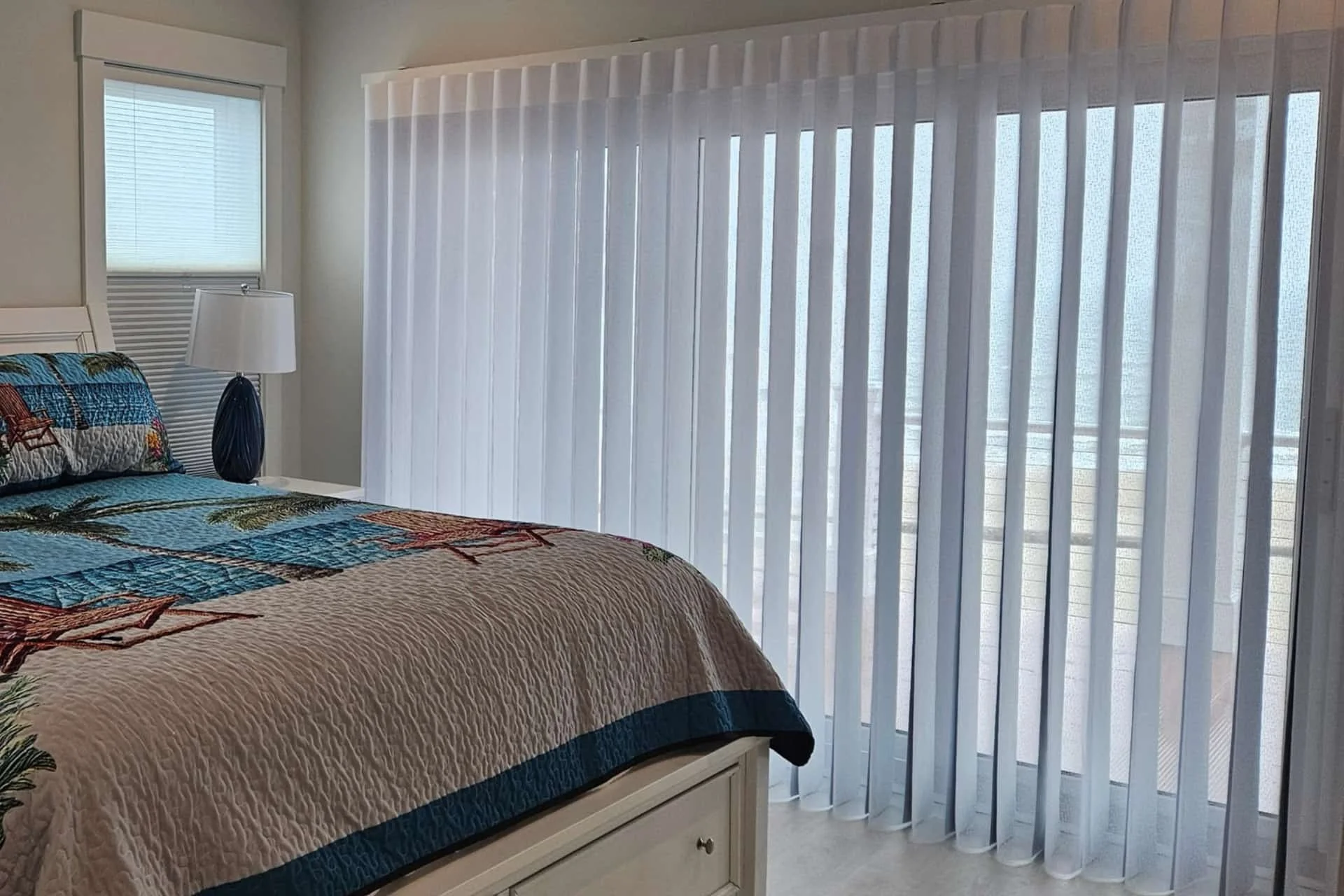
If you've ever walked past your sliding glass door on a cold January evening and felt that wall of chilly air before you even got close, you already know the problem. A sliding glass door is basically one giant pane of single-purpose glass, and cold air has no trouble finding its way through it. The window treatment that does the most to stop that draft is a tightly fitted cellular shade, mounted with side channels that seal the edges, since the honeycomb structure traps a layer of insulating air right against the glass instead of just covering it.
Why Do Sliding Glass Doors Lose So Much Heat?
Sliding glass doors are essentially oversized windows, and windows are already one of the weakest points in a home's thermal envelope. According to the U.S. Department of Energy, windows make up only about 10% of a typical home's surface area but can account for 30 to 40% of its heat loss in winter. A sliding door takes that same vulnerability and multiplies it by having far more glass surface than a standard window, plus a track and frame system that isn't always sealed as tightly as a fixed window unit. That combination is exactly why the back door tends to be the coldest spot in the room once temperatures drop.
Does a Standard Shade Solve the Problem?
A lot of homeowners assume any shade or blind will cut the draft, but coverage alone isn't the same as insulation. A thin shade or a basic blind hangs a layer of fabric or slats in front of the glass, which helps a little with radiant chill but does almost nothing to stop the air movement happening at the edges. Cold air pools near the glass and sinks, then slides out around the sides of the treatment if there's any gap between the shade and the frame. Without that seal, you're covering the window but not closing off the draft.
What Makes Cellular Shades Different?
Cellular shades, also called honeycomb shades, are built with a row of fabric cells that form small pockets of trapped air rather than a single flat panel. That trapped air acts as insulation in the same way a double-pane window outperforms a single pane, slowing down how quickly heat escapes through the glass. When they're mounted tightly with side channels that close off the gap between the shade and the window frame, they stop cold air infiltration at the edges too, not just block the view of the glass. That combination of insulating fabric and a sealed edge is what separates a cellular shade from a treatment that's just decorative.
How Do You Layer for Extra Protection on Very Drafty Doors?
On a sliding door that faces a particularly cold exposure, layering a cellular shade with a heavier drapery panel adds another buffer of air between the glass and the room without sacrificing daytime light control. The drapery doesn't need to be a heavyweight thermal curtain to help; even a mid-weight, light-filtering fabric adds a second layer that slows heat loss further when the shade is down and the panel is drawn at night. This combination works especially well on doors that get direct wind exposure, since it's addressing both the glass and the general air movement in front of it.
Getting the Mount Right Matters as Much as the Fabric
Even the best cellular shade underperforms if it's installed with gaps around the edges. An inside mount that's measured precisely to the opening, paired with side channels or a sealed headrail, closes off the pathways where cold air typically sneaks past a treatment. This is really where professional measurement earns its keep. A slightly undersized shade might look fine from across the room but still leave enough of a gap at the sides for a steady trickle of cold air to get through all winter.
The Payoff for Getting This Right
Properly installed cellular shades have been shown in Department of Energy-supported research at Oak Ridge National Laboratory to cut heating energy needs by almost 25% in homes where they're used. On a sliding glass door, which is already one of the biggest sources of heat loss in a coastal home, that kind of insulating value adds up fast over an entire winter, both in comfort and on the utility bill.
Get Your Sliding Door Winter-Ready With Surf City Blinds
At Surf City Blinds, we measure every sliding glass door in person so the cellular shade you get seals the way it's supposed to, not just covers the glass, for homeowners across Wilmington, Jacksonville, Hampstead, Surf City, and Topsail Beach. Schedule your free in-home consultation with our team, and we'll walk you through the best insulating options for your specific door and exposure.
Frequently Asked Questions
-
Both, when they're properly fitted. The honeycomb fabric insulates against radiant chill from the glass, while a tight side-channel mount closes off the gaps where cold air would otherwise leak around the edges.
-
Inside mounts with side channels generally perform better for draft control since they seal directly against the window frame. Outside mounts can work too, but they need to fully overlap the frame to prevent air leaks.
-
Not necessarily. Light-filtering cellular fabrics let daylight through while still providing insulation, so you don't have to sacrifice a bright room for a warmer one.
-
The air right next to an uncovered slider in winter can feel significantly colder than the rest of the room, since cold air pools against the glass and drifts outward, especially with any gaps in the door's seal.
-
Yes. Motorization changes how the shade operates, not its insulating construction, so a motorized cellular shade provides the same draft-blocking benefits as a manually operated one.